Mosque
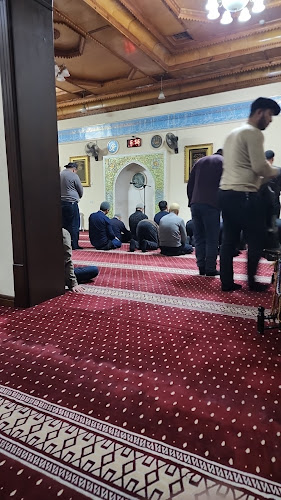
Hello Mosque (Salom Masjidi)
About this place
Discover Hello Mosque (Salom Masjidi)
Khoja Akhrar Vali Mosque
The Khoja Akhrar Vali Mosque, also known as the Juma Mosque, stands as a monumental testament to Tashkent's rich Islamic heritage and architectural evolution. Situated in the heart of Tashkent, Uzbekistan, this mosque has been a focal point of spiritual and cultural life for centuries.
Historical Background
The origins of the Khoja Akhrar Vali Mosque trace back to the 9th century, following the Arab conquest of the region. In 819, Emir Yahya ibn Asad, appointed to govern the lands of present-day Tashkent, selected a hill between Chorsu, Khadra, and Eski Juva squares to establish a new city named "Madina al-Shash," which later became Tashkent. On this hill, the foundation of the first Friday mosque in Tashkent was laid, marking the beginning of the city's Islamic architectural legacy.
The original mosque underwent numerous reconstructions over the centuries. The most renowned version was constructed in the 15th century by Sheikh Ubaydullo Khoja Akhror, a distinguished Sufi sheikh of the Naqshbandi order. His leadership and spiritual teachings significantly influenced the region, and his patronage led to the mosque's construction on the existing foundations. This mosque became a central place of worship and a symbol of the city's Islamic identity.
Architectural Features
The Khoja Akhrar Vali Mosque is renowned for its distinctive architectural design. The mosque features a prominent cube structure with large domes. Over time, galleries and cells around the courtyard were added. It is the third-largest Friday mosque in Uzbekistan, after Bibi-Khanum in Samarkand and Kalyan in Bukhara. (stantours.uz)
The mosque's design is characterized by its cube-shaped structure, symbolizing the sacred Kaaba. The east-facing arch and the lancet-shaped entrance arch add to its distinctive design. The dome is sphero-conical, without ornamentation, and is based on sphero-conical sails. (turkestantravel.com)
The entrance portal features a lancet-shaped arch, a design element not typical of Central Asian architecture but reminiscent of Gothic styles. This unique feature adds to the mosque's architectural diversity and reflects the cultural exchanges that have influenced Tashkent over the centuries. (turkestantravel.com)
Restorations and Modern Era
The mosque has undergone several restorations, particularly after the 1868 earthquake, which caused significant damage. The restoration in 1888, funded by Russian Emperor Alexander III, earned it the nickname "Tsar's Mosque." This restoration preserved the mosque's structural integrity and ensured its continued role as a central place of worship. (turkestantravel.com)
In the 20th century, the mosque faced challenges due to political changes and natural disasters. The original madrassah built in 1451 no longer exists; its bricks were repurposed in 1954. However, parts of the original mosque structure were rebuilt in the 20th century. Today, the mosque stands with three domes and a restored prayer hall, preserving its religious and historical significance. (stantours.uz)
Cultural and Spiritual Significance
The Khoja Akhrar Vali Mosque is not only a place of worship but also a symbol of resilience and continuity in the city's Islamic heritage. Despite natural disasters and political changes, the mosque remains a sacred site for both locals and visitors. Its location near Chorsu Bazaar, one of the oldest markets in Tashkent, underscores its role as a central point in the city's social and cultural life. (stantours.uz)
The mosque's architectural features, such as the cube-shaped structure and the unique entrance arch, reflect the rich cultural exchanges that have influenced Tashkent over the centuries. These elements highlight the city's role as a crossroads of various civilizations and its ability to integrate diverse architectural styles into its own unique identity.
Visitor Information
Today, the Khoja Akhrar Vali Mosque continues to serve as a place of worship and a cultural landmark. Visitors to Tashkent can explore the mosque's architectural beauty and learn about its historical significance. Its proximity to other
Location