Historical landmark
Madrasah Ibrokhim Okhund (Medrese Ibrokhim Okhund)
About this place
Discover Madrasah Ibrokhim Okhund (Medrese Ibrokhim Okhund)
Madrasah Ibrokhim Okhund
Situated in the heart of Bukhara, Uzbekistan, Madrasah Ibrokhim Okhund stands as a testament to the city's rich educational and architectural heritage. Constructed between 1858 and 1859, this two-story madrasah was founded by Mulla Mir Ibrahim Kashgari, a distinguished scholar and educator, during the reign of Emir Nasrullah Khan. The establishment of the madrasah was part of a broader initiative to promote Islamic education and scholarship within the Bukhara Emirate.
Historical Context
The mid-19th century was a period of significant cultural and educational development in Bukhara. Under the patronage of Emir Nasrullah Khan, the city witnessed the construction of numerous educational institutions aimed at fostering Islamic learning. Mulla Mir Ibrahim Kashgari, the founder of the madrasah, was a prominent figure in Bukhara's scholarly community. His contributions to education and his dedication to the dissemination of knowledge were instrumental in the establishment of the madrasah.
Architectural Features
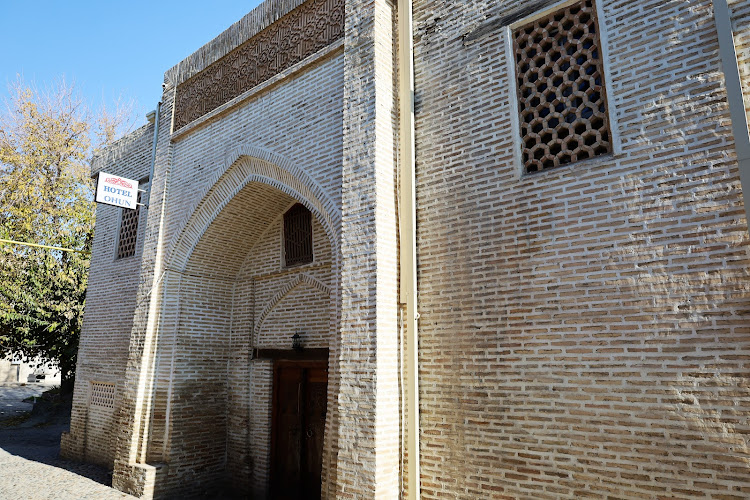
Madrasah Ibrokhim Okhund is constructed using baked bricks, a common building material in Central Asian architecture. The structure comprises 38 rooms, including classrooms and living quarters for students and faculty. The design of the madrasah reflects traditional architectural elements, with a central courtyard surrounded by rooms on all sides. The building's two-story design allowed for a larger number of students and faculty, facilitating a vibrant academic environment. The madrasah was originally part of an architectural ensemble that included the Oybinok Mosque and Muhammad Nabi Madrasah, contributing to the cohesive urban landscape of Bukhara.
Educational Role
During its operational years, Madrasah Ibrokhim Okhund played a pivotal role in the educational landscape of Bukhara. It offered a curriculum centered on Islamic studies, including theology, jurisprudence, and literature. The madrasah attracted scholars and students from various regions, contributing to the intellectual vibrancy of the city. The endowment documents of the madrasah, which have been preserved, indicate that the institution was well-funded, with resources allocated for its maintenance and the support of its educational activities. These documents bear the seals of Emir Nasrullah Khan and Qazi ul-Quzzat Sufi Khoja ibn Akhund Amonullah Khoja, underscoring the madrasah's significance and the support it received from the ruling authorities.
Soviet Era and Restoration
Following the establishment of Soviet rule, the madrasah ceased its educational functions, as religious institutions faced suppression during this period. The building's original purpose was altered, and it underwent various changes in use. In 1995, the madrasah was repurposed to house the Varakhsha Archaeological Museum, which showcases artifacts from the ancient city of Varakhsha. This transformation allowed the building to continue serving the public, albeit in a different capacity. In 2011, a state program was developed to restore and adapt the madrasah for modern use. The restoration efforts included structural strengthening, repairs, and adaptations to ensure the building's preservation and functionality. A budget of 25 million soums was allocated for these works, reflecting the government's commitment to preserving Uzbekistan's cultural heritage.
Cultural Significance
Madrasah Ibrokhim Okhund holds significant cultural and historical value. As an architectural monument, it reflects the traditional building techniques and aesthetic preferences of the 19th century in Central Asia. The madrasah's inclusion in the national list of real estate objects of material and cultural heritage of Uzbekistan underscores its importance in the country's historical narrative. The building's preservation and adaptation for modern use serve as a bridge between Uzbekistan's rich past and its present, allowing visitors and scholars to engage with the nation's history and culture.
Visitor Information
Today, Madrasah Ibrokhim Okhund serves as a tourist service facility, offering visitors a glimpse into Bukhara's rich history and architectural heritage. The Varakhsha Archaeological Museum, located within the madrasah, provides insights into the ancient city of Varakhsha, with exhibits that include artifacts and archaeological findings. Visitors can explore the building's architectural features, including its two-story design and the arrangement of rooms around the central courtyard. The madrasah's location in the historic center of Bukhara makes it accessible to tourists exploring the city's other landmarks, such as the Poi Kalon complex and the Ark Fortress. The restoration efforts have ensured that the madrasah remains a vibrant part of Bukhara's cultural landscape, offering educational and cultural experiences to all who visit.
Conclusion
Madrasah Ibrokhim Okhund stands as a significant monument in Bukhara's rich tapestry of history and culture. Its establishment in the 19th century, architectural design, and subsequent restoration efforts reflect the city's commitment to preserving its heritage. As a center of learning and now a museum, the madrasah continues to educate and inspire, serving
Location